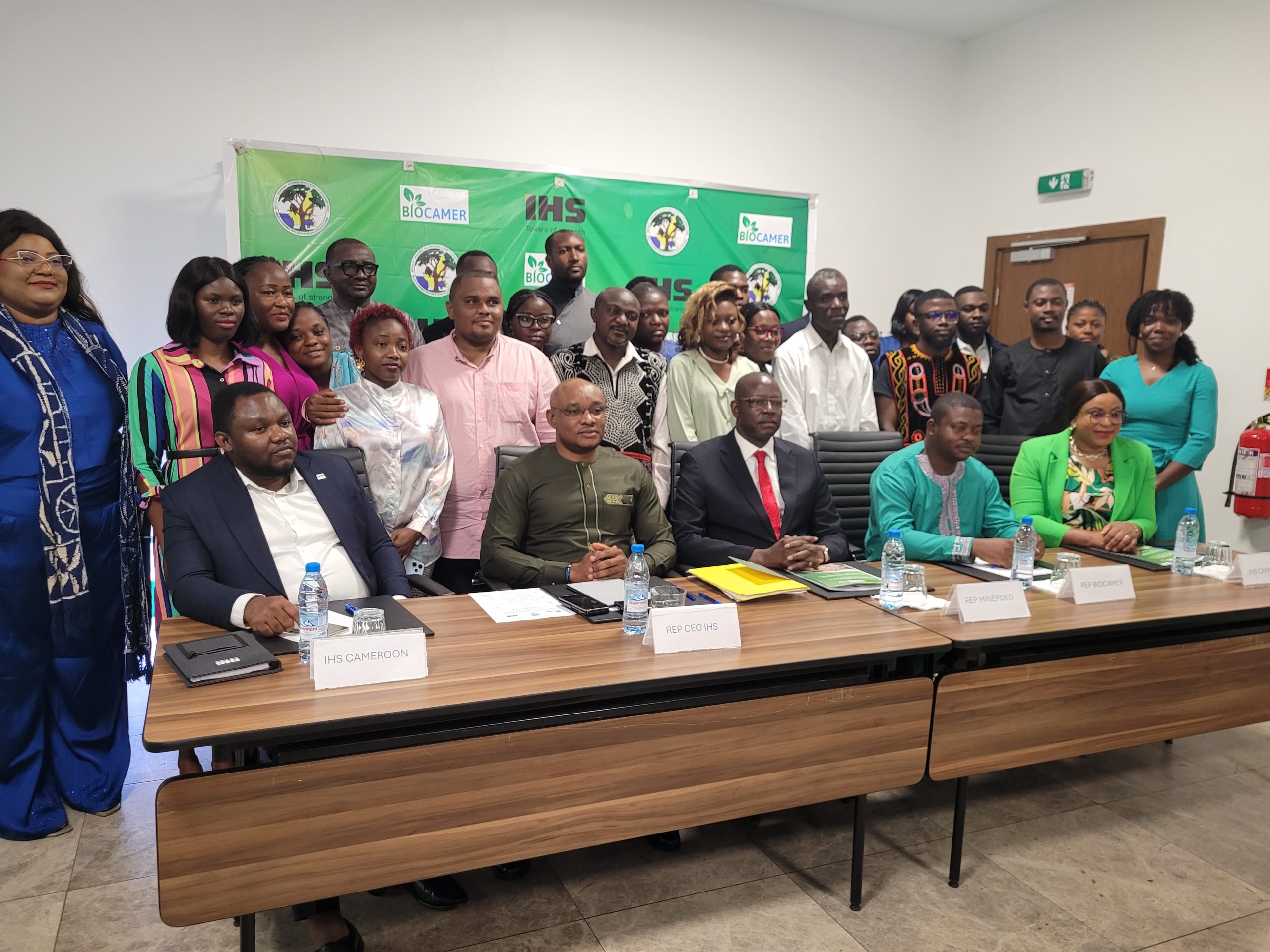
In commemoration of the 53rd edition of World Environment Day, IHS Cameroon, in a technical partnership with the Biodiversity Cameroon association dubbed BIOCAMER, hosted a pivotal one-day training seminar for media professionals.
Held on Thursday, June 25, 2026, at the Starland Hotel in Yaounde, the event gathered over 30 journalists from the Center, Littoral, West, and South-West regions. The seminar was designed to align with the global theme of “climate actions,” urging a collective effort to rethink societal economic systems and repair humanity’s strained relationship with the climate.
The seminar, themed “Media professionals facing the household waste crisis: raising awareness and educating to improve the face of our cities,” aimed to equip journalists to fully embrace their role as the fourth estate in environmental protection. During the seminar, BIOCAMER’s President Mathias Mouende Ngamo emphasized that the waste crisis has grown wild across the country, creating severe visual pollution and deep-seated health and environmental hazards. He also noted that waste is no longer a matter of choice; it has aggressively imposed itself on the daily lives of citizens, penetrating into the very spaces they inhabit.
To comprehensively address the problem, the training was structured around three core objectives: understanding, learning, and changing. The initial modules guided journalists through basic environmental concepts, a situational overview of waste management in Cameroon, and the existing legal frameworks governing the sector. A dedicated module on “Journalism and waste management” focused heavily on transforming information into practical learning derived from personal experience, teaching participants the structural mechanics of managing household waste effectively.

A major highlight of the seminar was a presentation by Mathias Mouende Ngamo on the profound impact of solution journalism on the environment. According to him, this constructive writing approach shifts the narrative away from merely reporting problems to actively highlighting successful practices.
By adopting this new paradigm, journalists can foster public interest, inspire communities to replicate sustainable habits, and provide public authorities with clear, actionable perspectives for a better systemic impact.
The urgency for a collaborative, multi-sectoral approach was a resonant takeaway from the event. Biocamer’s president argued that waste management doesn’t only involve the Ministry of Environment, but equally the Ministries of Transport and Health due to related road hazards and disease outbreaks like cholera. He reiterated the enterprise’s long-standing call for a multi-ministerial mixed committee of technical experts to jointly devise solutions aimed at restoring the aesthetic and ecological health of Cameroonian cities.
Echoing the timely nature of this intervention, Boris Kalof Batata, a journalist for CBS Radio Buea with an emphasis on environmental reporting, characterized the issue as a full-blown national crisis that is rarely spoken about as such. While emphasizing that journalists have reported on waste for as long as the problem has existed, Batata lauded the organizing bodies for recognizing the strategic need to empower the media to continue and amplify this crucial call to action.
However, he maintained that the intervention must transcend media training, recommending that these corporate and civil organizations add their collective voice to pressure policymakers into passing enforcement-heavy policies.
Ultimately, the intensive day of presentations and interactive debates culminated in a unified front among the attendees, leading to the adoption of an “Engagement Chart of Journalists for the promotion of a safe environment in Cameroon- Manifest of traceability.” This landmark manifesto seals the commitment of the participating media professionals to utilize their platforms dynamically.
As media voices join corporate stakeholders in demanding policy will and public accountability, the ultimate goal remains clear: tackling the hazardous waste issue to save the environment, which, in turn, saves humanity.