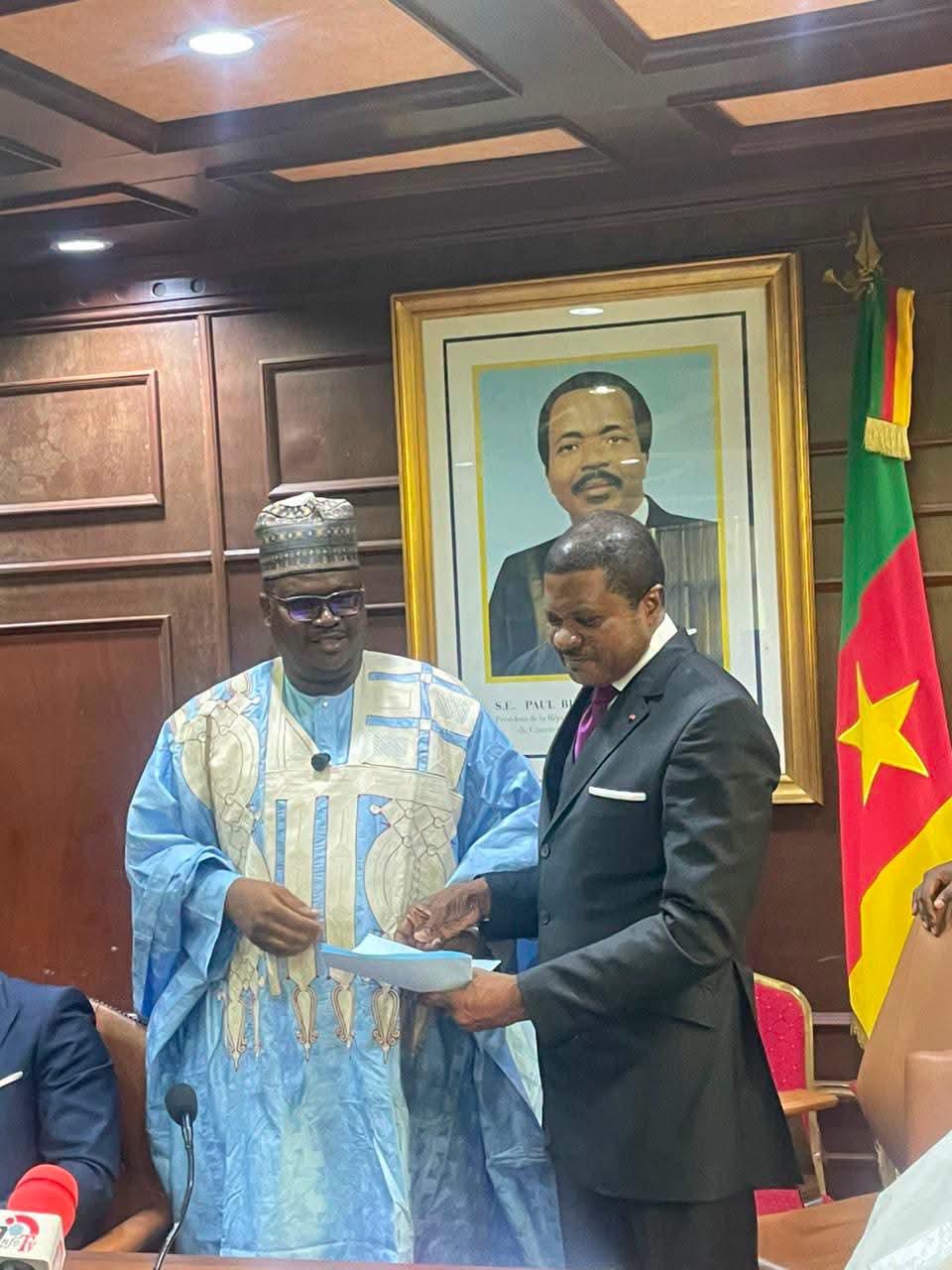
The Minister of Transport, Jean Ernest Masséna Ngallè Bibéhè, chaired a working session this Monday, July 6, 2026, in the ministry’s conference hall with leaders of road freight transport unions and socio-professional organizations under the Alliance of Trade Unions for the Development of Transport – ASDETRO.
Requested by the sector’s professionals, the meeting provided a platform to discuss structural concerns regarding the organization of their profession. Particular emphasis was placed on the operational implications of Decree No. 2025/314 of July 16, 2025, signed by the President of the Republic, which officially transformed the National Shippers’ Council of Cameroon – CNCC into a public capital company.
During the session, the Minister of Transport commended the professional organizations for their highly responsible approach, noting that sustainable development relies heavily on constructive dialogue and consultation. He reiterated that this strategic reform reflects the clear vision of the Head of State to modernize the governance of the national supply chain.
By restructuring the CNCC, the government aims to establish a more agile legal framework tailored to the contemporary demands of trade and transit, ultimately benefiting shippers, carriers, and all logistics stakeholders.
At the end of the deliberations, the union leaders reaffirmed their support for the government-led reforms and expressed their full availability to assist in their practical implementation. To mark the occasion, the representatives of ASDETRO officially presented the Minister of Transport with a formal Motion of Thanks and Deference addressed to His Excellence Paul Biya, President of the Republic and Head of State.
In the document, the unions highly praised the ongoing executive initiatives driving the modernization of the transport sector, specifically spotlighting the digitalization of administrative procedures, enhanced security measures for transit activities, freight regulation, and the structural transformation of the CNCC.
The working session concluded in an atmosphere of mutual trust, shared responsibility, and productive cooperation among all parties involved. Reflecting the cross-sectoral importance of these logistical reforms, the meeting was attended by several high-ranking government dignitaries. These included the Minister Delegate to the Minister of Transport, the Secretary General of the Ministry of Transport, the Secretary General of the Ministry of Labour and Social Security, and the Inspector General of the Ministry of Transport.