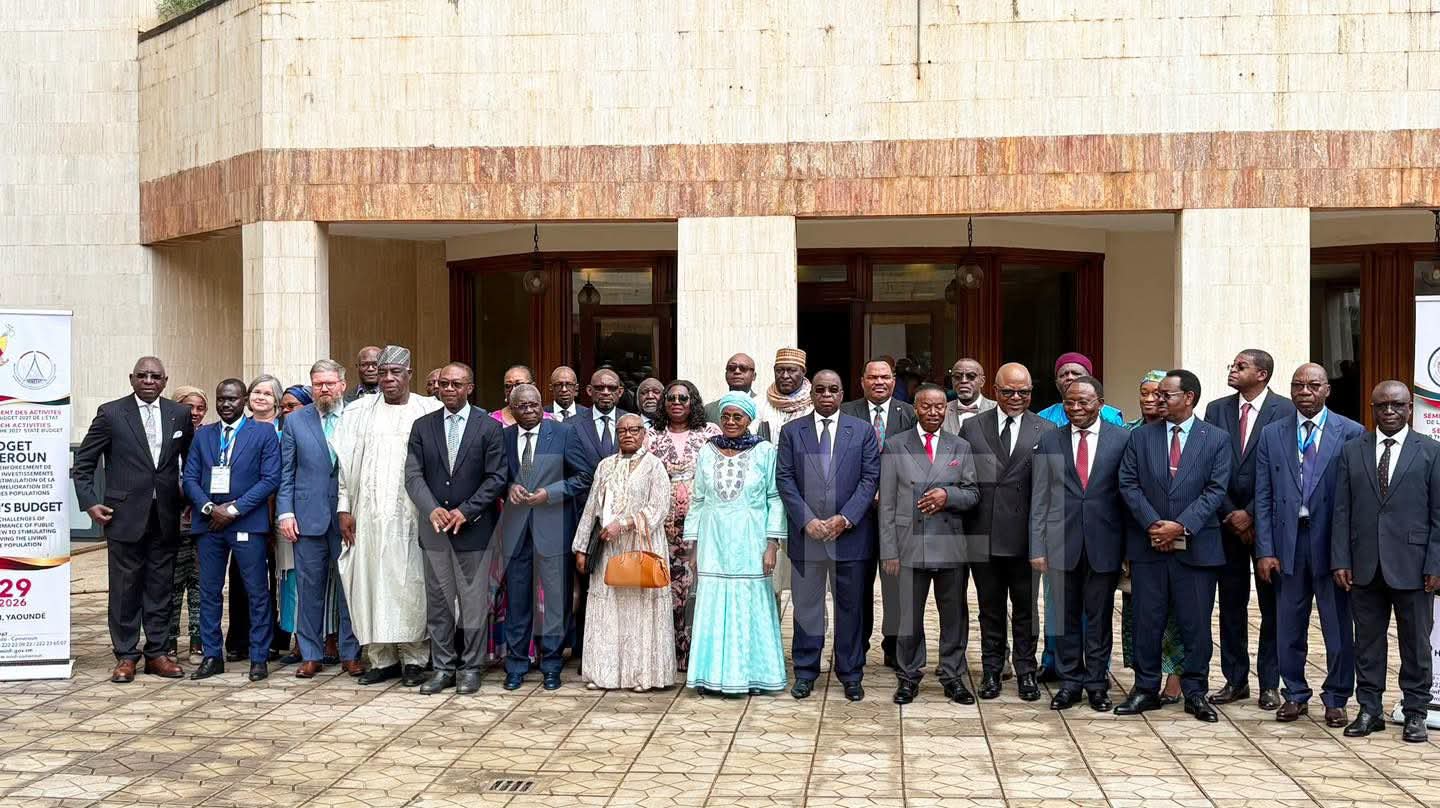
Launched on July 28, 2026, in Yaoundé by the Minister of Finance, Louis Paul Motaze, the preparation process for the 2027 State budget opens in a tense macroeconomic climate.
A widening deficit, heavy petroleum subsidies, falling budget support, and an uncertain international environment are forcing the Cameroonian government to reconsider its fiscal strategy. The chosen theme for this session focuses on strengthening the operational effectiveness of public investments to stimulate economic growth and improve the living conditions of the population, underscoring the tight fiscal margin available to decision-makers.
The financial diagnosis presented by the Ministry of Finance remains stark. At the end of the first quarter, state expenditures reached 1,547.1 billion FCFA, creating a gap of 215.7 billion FCFA over total revenues. This imbalance is further exacerbated by government subsidies maintained on fuel prices to buffer domestic consumers against volatile global oil prices. Consequently, despite slight gains compared to 2024, the overall budget deficit rose to 1.0% of GDP in 2025—exceeding the revised target of 0.8% and prompting urgent calls for spending control to protect debt sustainability.
Domestically and internationally, multiple pressures compound the challenge. Global supply chain disruptions, tight financial markets, sub-regional market stagnation, and declining oil sector output coincide internally with falling budget support, low corporate productivity, and government payment delays to creditors.
Despite these headwinds, Cameroon projects economic growth around 3.5% for 2026 under its ongoing program with the IMF. However, with limited prospects for acquiring additional financial resources in 2027, the government must rely on internal optimizations rather than external windfalls.
To navigate these constraints, the Minister of Finance outlined clear strategic priorities centered on revenue optimization and expenditure efficiency. Key measures include expanding the tax base, modernizing tax and customs administration, and accelerating local production through the Integrated Agropastoral and Fisheries Import-Substitution Plan.
Priorities also extend to stabilizing energy sector entities like SONARA, boosting major infrastructure such as the Kikot hydroelectric plant, advancing decentralization funds for local councils, and ensuring that public investments are strictly selected, timely executed, and properly maintained to deliver maximum economic impact.
Notwithstanding these fiscal limitations, the state intends to maintain progress on major national development projects, including the reconstruction of the North-West and South-West regions, major road and port infrastructure, and the expansion of universal health coverage.
To help fund these ambitions and bridge financing gaps, the government plans to negotiate a new economic and financial program with the IMF and other development partners. Ultimately, the directive for the 2027 budget planning process is clear: public administrations must carefully prioritize initiatives to achieve better results with limited resources, ensuring every spent franc directly drives growth and social well-being.